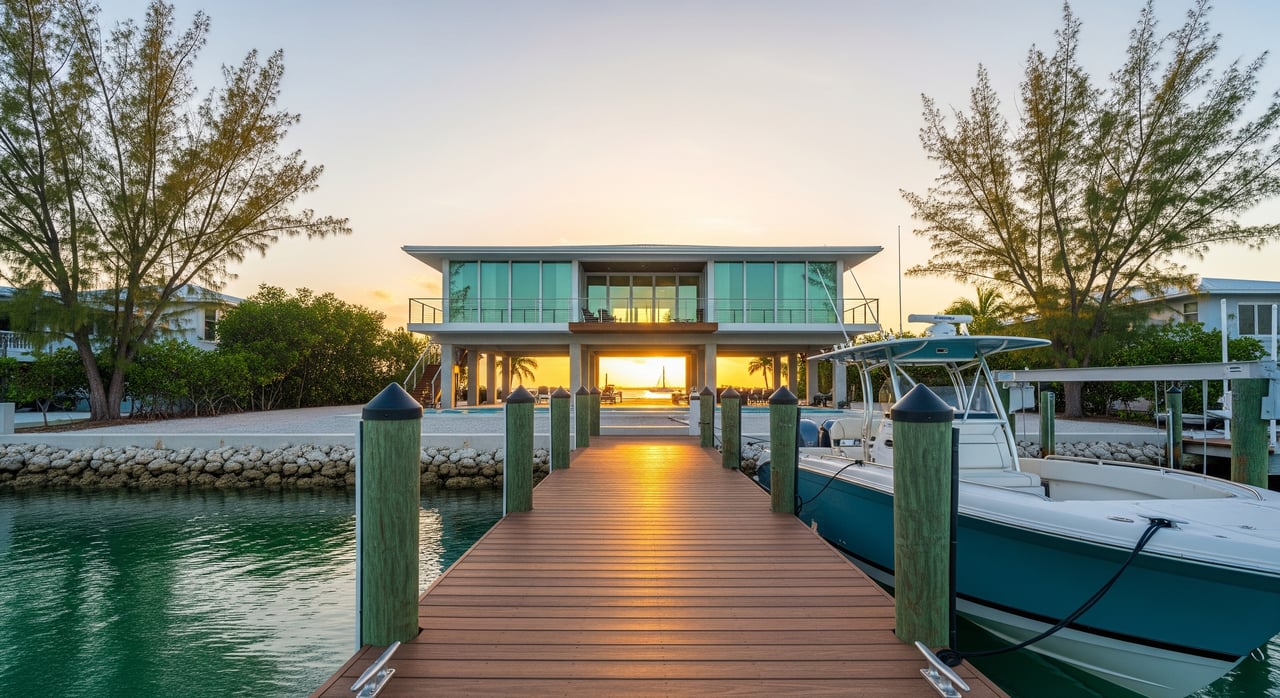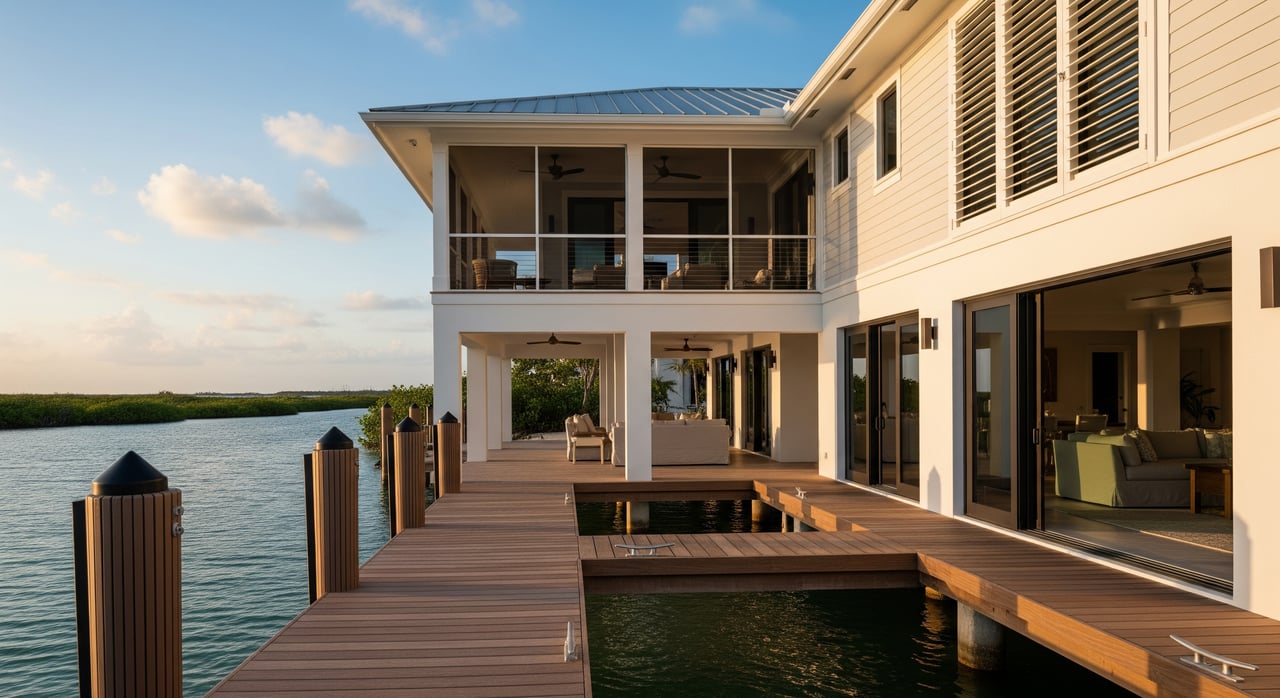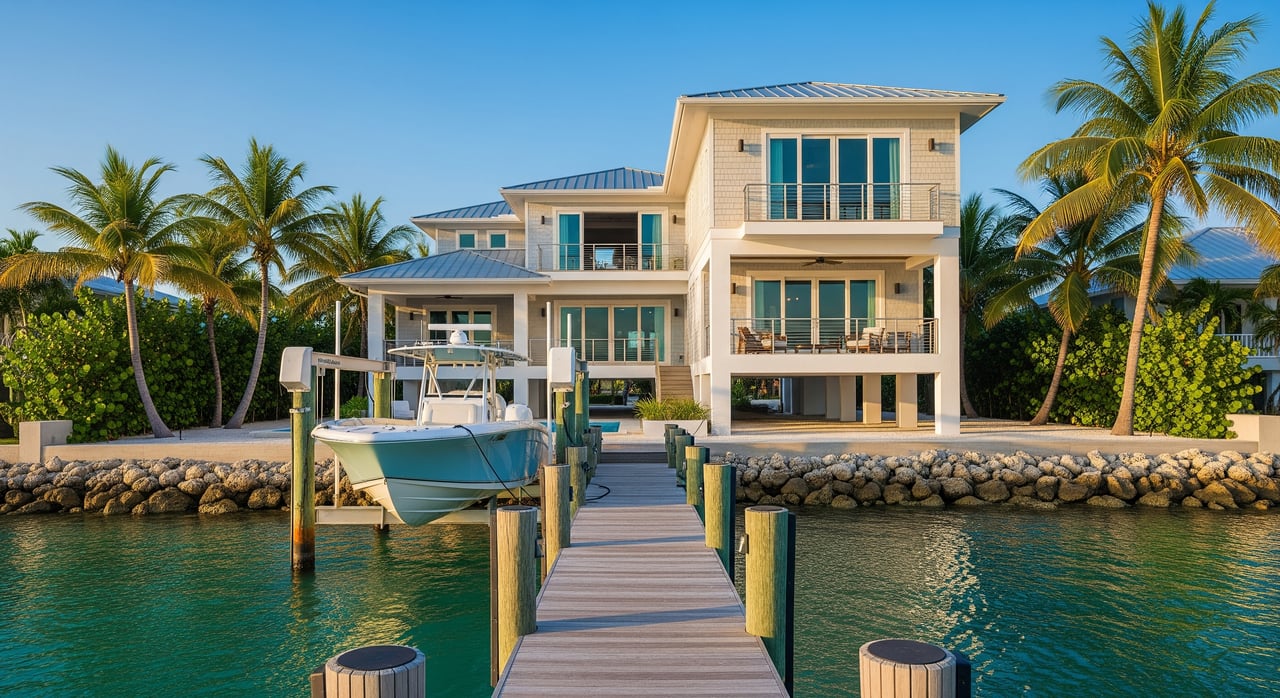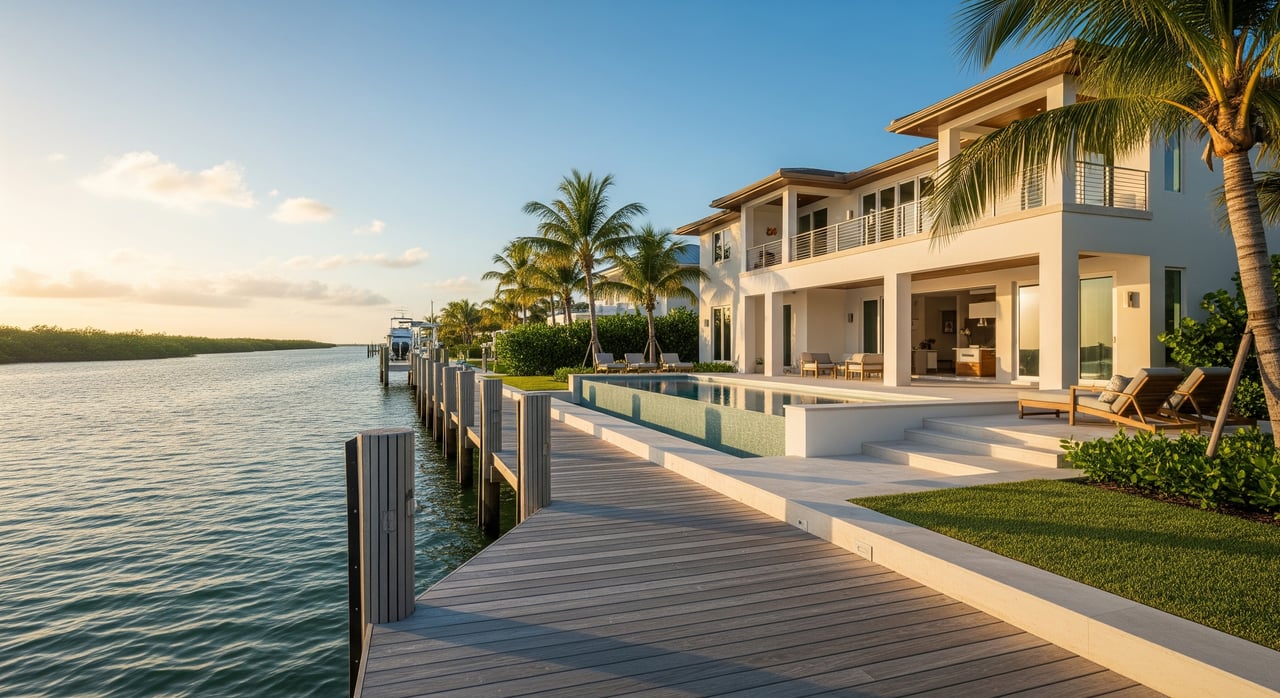
Thinking about selling your Key Haven waterfront home? Pricing it right can make or break your outcome in this niche market. You face unique variables that mainland sellers rarely consider, from navigable depth and seawall condition to flood zones and insurance costs. In this guide, you’ll learn how to set a confident price, time your launch, document the water-side details buyers value, and create a plan that supports your number. Let’s dive in.
Why Key Haven pricing is different
Key Haven is a small, waterfront-focused neighborhood near Key West. The buyer pool here includes primary residents, seasonal owners, retirees, and boaters who care deeply about water access. Because the market is more niche and less liquid than many mainland areas, accurate pricing and clear documentation matter even more.
Demand in the Florida Keys often peaks from late fall through spring. If you plan to list between November and April, you can benefit from more eyes on your property. Outside peak season, you may need a longer runway and tighter pricing strategy to reach the same result.
Finite land supply and high replacement costs for waterfront improvements also shape value. When seawalls, docks, and permitting are in strong condition, you can support higher per-square-foot pricing compared to non-waterfront homes. The key is proving those attributes and making them easy for buyers to verify.
Build a stronger CMA for waterfront
Start with the right comps
Waterfront comps drive valuation in Key Haven. Use recent sales within the last 3 to 12 months where possible, and adjust carefully for:
- Waterfront type and orientation: ocean exposure vs. protected canal vs. bay or inlet.
- Linear water frontage and usable depth for boats.
- Dock and lift presence, capacity, permits, and condition.
- Seawall age and material, plus any documented repairs or replacements.
- Lot size, elevation, and any elevation certificate.
- Structural condition and hurricane resilience upgrades.
- Allowable and demonstrated rental history, where applicable.
If you cannot find close matches in Key Haven, widen your search to similar Lower Keys neighborhoods and apply thoughtful adjustments for water type and improvements. Appraisers will do the same.
Gather the right data before pricing
You will price more confidently when you can show buyers the numbers. Pull together:
- Linear feet of water frontage.
- Dock permits, dock length, boat-lift capacity, and permit documentation.
- Seawall age, repair history, and any engineer reports or replacement estimates.
- FEMA flood zone and an elevation certificate, if available. Check your parcel and maps through the FEMA Flood Map Service Center.
- Recent insurance costs for wind and flood. For consumer-friendly flood insurance guidance, review the NFIP’s FloodSmart resources.
- A summary of truly comparable recent waterfront sales with dates, price per square foot, and days on market.
Time your listing to the Keys market
In the Keys, timing influences days on market and negotiation strength. Listing in high season often means more qualified showings in a shorter window. If you need to list in summer, plan to market longer, underscore your home’s water-side features, and price with current absorption in mind.
Price bands also matter. Many buyers set MLS searches at round-number thresholds. Position your list price so it appears in the most active search ranges for Monroe County buyers.
Choose your pricing strategy
Aggressive pricing
Listing slightly under perceived market value can spark multiple offers during peak season. You trade a bit of initial price for speed and leverage. The risk is underestimating your home’s unique waterfront premium if adjustments are not precise.
Market-value pricing
Pricing exactly to your CMA is often the best balance of time and net proceeds. This approach attracts qualified buyers who understand Keys-specific features and will pay for them when documentation is clear.
Premium pricing
If your property offers truly rare attributes—such as direct Atlantic access, a newly rebuilt seawall, a long permitted dock with lift, and recent hurricane hardening—you may test a premium list price. This requires excellent marketing that educates out-of-area buyers and patience if activity starts slower than average.
Present and justify your price
Document the waterfront assets
Water-side value is in the details. Make those details obvious:
- Provide a one-page fact sheet with frontage, dock specs, lift capacity, approximate depth at mean low water, and distance to open water.
- Share permits and recent inspections for the seawall and dock. Keep copies ready for showings.
- Offer a clear, quantified view of operating costs: sample flood and wind insurance premiums, property taxes, and typical utilities. Transparency builds trust.
- Use professional photography and drone video to show approach channels, orientation to the Atlantic or Gulf, and surrounding shelter.
Be transparent about risks and costs
Buyers in the Keys weigh flood zones, elevations, and long-term resilience. You can help them do that homework:
- Verify your flood designation through the FEMA Flood Map Service Center and include the information in your listing package.
- Share flood insurance context with a link to NFIP’s FloodSmart so buyers can estimate premiums.
- If your shoreline or dock work touches sensitive areas, understand the Florida DEP coastal programs and the Coastal Construction Control Line where applicable.
- For local permitting and code questions, direct buyers to Monroe County planning and permitting.
- For long-term sea-level context, add the NOAA Sea Level Rise Viewer. Buyers appreciate honesty about future risk and resilience.
Navigate rules, permits, and insurance
Permits influence value and mortgageability. Unpermitted docks or seawalls create uncertainty that buyers often price into offers. If you lack documentation, consider ordering inspections and gathering replacement estimates before going live. This helps you set expectations and negotiate from strength.
Insurance is another major lever. Premiums in the Keys are higher than average, and availability can change year to year. Providing sample quotes for typical buyer scenarios reduces surprises. It also helps appraisers and lenders understand why your price is reasonable for the property’s specific risk profile.
For broader market context, review statewide trends through Florida Realtors market trends. Then center your pricing on your immediate Key Haven comps, not statewide averages.
Plan for negotiation and adjustments
Well-prepared sellers minimize back-and-forth. Consider these levers:
- Pre-listing inspections for seawall, dock, and roof. Share reports upfront to boost confidence.
- Transferable permits and warranties, where available.
- A targeted credit for dock or seawall maintenance when buyers raise concerns.
- A written pricing review plan with 30, 60, and 90-day checkpoints tied to metrics like showings, online views, and feedback.
A sample 30-60-90 plan:
- Day 0 to 30: Launch with full media, lifestyle copy, and documentation. Collect feedback. If you are below benchmark showings, adjust marketing, not price.
- Day 31 to 60: If quality showings are steady but offers are light, consider a modest price adjustment or a buyer incentive such as a closing-cost credit for dock maintenance.
- Day 61 to 90: If activity is flat, reassess comps and market absorption. Execute a defined price improvement aligned with the next active search band.
Your Key Haven action checklist
- Confirm your flood zone and pull your elevation certificate if available. Use the FEMA Flood Map Service Center.
- Compile a waterfront fact sheet: frontage, dock length and permits, lift capacity, seawall age and condition, approximate mean low water depth.
- Order inspections for the seawall and dock, and obtain repair or replacement estimates if needed.
- Gather sample wind and flood insurance quotes from local brokers. Use NFIP’s FloodSmart for consumer context.
- Assemble 3 to 6 recent, like-kind waterfront comps with notes on water type and dock features.
- Decide on your listing window. If possible, target high season. If not, build a longer marketing timeline.
- Choose your pricing strategy and agree on a 30-60-90 review cadence.
- Prepare permits and documentation for quick buyer review. Reference Monroe County planning and permitting for open permit checks and process questions.
Ready to talk strategy?
You deserve a pricing plan that reflects Key Haven’s water realities, not just square footage. With local knowledge, construction-informed insight, and a full vendor network, you can price with confidence and negotiate from strength. If you are considering a sale, connect with Christopher Tanaka for a Keys-specific strategy and to get your instant home valuation.
FAQs
How much of a premium does waterfront add in Key Haven?
- It depends on water type, frontage, dock and lift capacity, navigability, and seawall condition. Use recent, like-kind waterfront comps and adjust for those attributes.
How do flood zones affect price and buyer decisions?
- Flood zones and elevation influence insurance cost and loan requirements. Verify your property on the FEMA Flood Map Service Center and share flood insurance context from NFIP’s FloodSmart.
Should I repair or replace a failing seawall before listing?
- If feasible and properly permitted, repairs can preserve your asking price. If cost-prohibitive, disclose condition, provide estimates, and price accordingly.
What makes a comp truly comparable for my waterfront home?
- Match water type and orientation, frontage length, dock and lift specs, navigable depth, seawall age, elevation, and condition. Adjust carefully for each factor.
How long will it take to sell a Key Haven waterfront home?
- Timing matters. In high season, well-priced homes often move faster. Overpriced listings or off-season launches typically require a longer marketing runway and possible price adjustments.